
Carpal Tunnel Massage Seattle: Relief for Tech Workers
· FlowState Seattle Massage
Seattle carpal tunnel massage therapy using myofascial release and deep tissue techniques. We relieve median nerve compression and restore hand function.
Book Now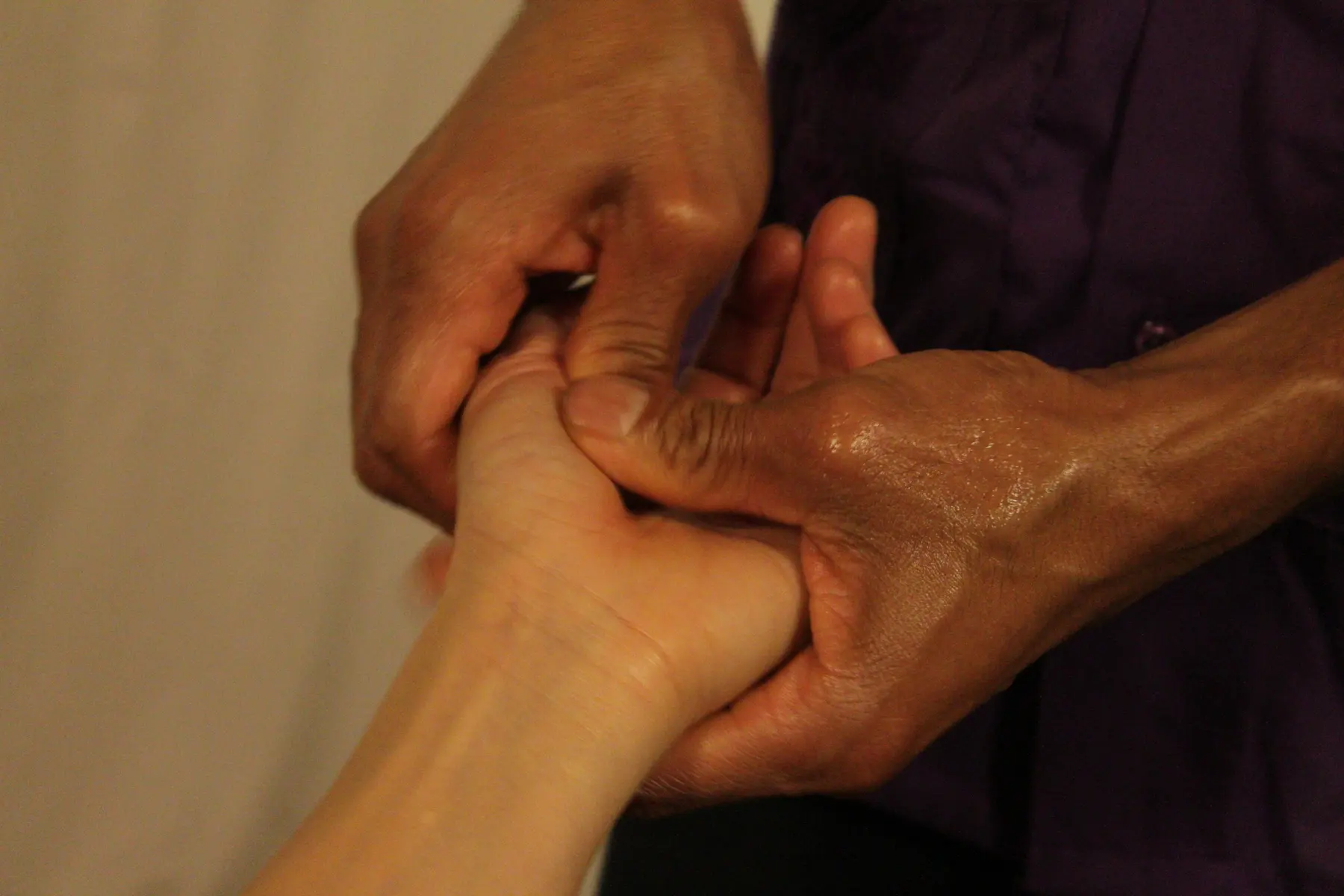
Published on October 12, 2026 | By FlowState Seattle Massage
Carpal Tunnel Massage Seattle: Relief for Tech Workers
Carpal tunnel syndrome massage in Seattle targets the median nerve compression causing tingling and numbness in your thumb, index, middle, and ring fingers. Our clinical therapists combine deep tissue and myofascial release to relieve the swollen tissue pressing through that narrow wrist passageway. We restore grip strength and hand function for tech workers.
Key Takeaways
- Carpal tunnel syndrome stems from median nerve compression at the wrist, causing tingling and numbness in specific fingers.
- Repetitive static loading from sustained keyboard positioning creates muscle fatigue, inflammation, and carpal tunnel narrowing over time.
- Fascial restrictions in the forearm transmit tension directly into wrist structures, requiring treatment along the entire nerve pathway.
- Deep tissue massage combined with myofascial release restores slide-and-glide mechanics that repetitive motion gradually destroys.
Why does carpal tunnel hit Seattle tech workers so hard?
Carpal tunnel syndrome strikes Seattle’s tech workforce with alarming frequency. The condition stems from compression of the median nerve at the wrist, a direct consequence of the repetitive hand and wrist motions that define coding, typing, and trackpad use day after day. Without intervention, that familiar tingling in your thumb and first two fingers progresses to grip weakness and nighttime numbness that disrupts sleep and productivity alike.
The problem runs deeper than the wrist alone. The median nerve can get compressed at several points along its path, not only at the carpal tunnel. Hours spent in forward-shoulder desk posture create a chain of tension that starts in the neck and travels all the way to the fingertips. We see this pattern constantly in our clinic: a repetitive strain injury massage Seattle approach must address the entire arm line, not just the painful spot.
Why does wrist pain from typing keep coming back?
Typing alone rarely causes the initial injury. The real culprit is sustained static loading: holding your hands in a fixed position over a keyboard for ten or more hours daily. Muscles fatigue, inflammation builds, and the carpal tunnel narrows. Wrist pain massage Seattle sessions that only work the forearm miss the upstream restrictions in the shoulder and neck that keep re-triggering the symptoms.
How does deep tissue work help tech workers specifically?
Deep tissue massage Seattle tech workers rely on targets the adhesions that form in overused flexor muscles. These adhesions tether the tissues that should glide freely, increasing pressure on the median nerve. Combined with myofascial release along the nerve’s entire pathway, this approach restores the slide-and-glide mechanics that repetitive motion gradually destroys. The result is lasting relief rather than temporary symptom suppression.
What makes deep tissue massage effective for wrist pain?
Deep tissue massage relieves wrist pain by releasing adhesions and restoring mobility in the deeper muscle layers. Our clinical team at FlowState Seattle Massage uses firm pressure and slow strokes to break down rigid tissue restrictions that compress nerves and limit movement. Without this targeted intervention, chronic tension in the forearm flexors and extensors continues pulling on the carpal tunnel structures. The result is persistent numbness, tingling, and grip weakness that disrupts your workday and sleep.
We combine deep tissue massage seattle tech workers rely on with myofascial release techniques. Fascia is a connective tissue that supports the body and links muscles, nerves, bones, blood vessels, and organs. This web-like network runs from the top of your head to the tip of your toes. A restriction in one area creates tension elsewhere. Picture a wool sweater: pull on one thread and the entire garment shifts. The same principle applies to your forearm fascia tugging on wrist structures.
How does fascia contribute to wrist and forearm pain?
Fascial restrictions in the forearm transmit tension directly into the wrist. Our deep tissue massage sessions target these adhesions where they originate. The flexor and extensor muscle groups house layers of connective tissue that stiffen with repetitive use. Releasing those layers reduces the compressive load on the median nerve.
Why do Seattle tech workers need specialized wrist pain treatment?
Wrist pain massage seattle professionals seek must address the specific demands of keyboard-intensive work. Hours of typing and mousing create ** repetitive strain injury massage seattle** therapists treat through multi-modality approaches. We assess the entire kinetic chain from neck to fingertips. Tension in the scalenes or pectorals often contributes to downstream wrist symptoms. Our therapists release these upstream restrictions while working directly on forearm adhesions.
The treatment sequence matters. We begin with broad myofascial release to warm the tissue. Then we apply focused deep tissue strokes along the forearm flexors and extensors. Joint mobilization follows to restore full wrist range of motion. Each session builds on the last, progressively reducing pain and improving function for Seattle’s desk-bound workforce.
How does myofascial release decompress the median nerve?
Myofascial release techniques are specialized methods that alleviate pain and tension in compressed tissues. We use sustained, gentle pressure to stretch and soften the fascial layers surrounding the median nerve.
The myofascial system wraps and connects skin, bone, muscle, and organs like a spider’s web. When this web tightens inside the carpal tunnel, it strangles the median nerve. That compression produces the tingling, numbness, and grip weakness that sends tech workers searching for ** wrist pain massage Seattle** specialists.
Why does forearm tension affect the wrist?
Fascia runs from the top of your head to the tip of your toes. A restriction in one area pulls on distant structures. Tight forearm fascia tugs on the wrist tunnel.
This explains why deep tissue massage Seattle tech workers receive includes forearm and upper arm work. Releasing the forearm’s fascial adhesions reduces downstream compression at the wrist. We treat the full chain, not just the painful spot.
What happens during myofascial release for carpal tunnel?
The technique bypasses aggressive deep stripping. Instead, our therapists locate a fascial restriction and wait for the tissue to soften. This gentle hold allows the collagen matrix to reorganize.
Conventional repetitive strain injury massage Seattle clinics often chase trigger points with heavy pressure. Myofascial release works differently. It signals the nervous system to relax protective guarding. Blood flow improves. The median nerve gains breathing room.
How quickly does the nerve decompress?
Some clients notice reduced tingling after a single session. Chronic cases typically require multiple treatments. The fascia remodels gradually. Each carpal tunnel massage Seattle appointment builds cumulative relief as the tissue sheath stops gripping the nerve.
What should a repetitive strain injury massage session include?
A repetitive strain injury massage session should combine targeted soft tissue work with joint mobilization to restore mobility and relieve chronic pain. Our Seattle clinic builds every session around four core modalities: Myofascial Release, Deep Tissue, Swedish Relaxation, and Joint Mobilization. Skipping any one of these elements leaves the underlying restriction untreated.
We start with assessment and myofascial release. Fascia wraps every muscle, nerve, and bone in a continuous web. Restrictions in one area create tension elsewhere along that web. Releasing those restrictions prepares the tissue for deeper work.
What happens during the deep tissue portion?
Deep tissue work addresses the specific muscles overloaded by repetitive motion. For Seattle tech workers, that means forearm flexors, wrist extensors, and the intrinsic hand muscles. We work slowly through each layer rather than forcing through guarded tissue.
How does joint mobilization fit into the session?
Passive stretching restores range of motion that soft tissue work alone cannot reach. We move each affected joint through its full arc without active effort from the client. This combination of release, deep work, and mobilization produces lasting relief.
A complete session includes:
- Myofascial release to address fascial restrictions
- Deep tissue work on overused forearm and hand muscles
- Swedish relaxation techniques to calm the nervous system
- Joint mobilization through passive stretching
We also offer stretch therapy as a standalone option for clients who need focused mobility work between full sessions.
Where can Seattle tech workers find lasting carpal tunnel relief?
Seattle tech workers find lasting carpal tunnel relief through specialized clinical massage therapy. Carpal tunnel massage Seattle treatments target the root causes of nerve compression, not just the symptoms. Without targeted intervention, chronic tingling and numbness progress to permanent grip strength loss. That loss threatens your ability to code, type, and perform daily tasks.
Our downtown Seattle clinic brings together licensed clinical massage therapists who understand repetitive strain injuries intimately. We see the same patterns every day. Long hours at standing desks. Endless keyboard shortcuts. The subtle wrist flexion that never quite stops.
What makes clinical massage different from relaxation massage for carpal tunnel?
Clinical massage addresses the physiological mechanism of nerve entrapment. The median nerve travels through a narrow passageway on the palm side of your wrist. When surrounding tissue swells or thickens, it compresses that nerve. Our therapists release the soft tissue restrictions causing that compression. Relaxation massage never reaches these deeper structures.
How do therapists address wrist and forearm tension simultaneously?
Wrist pain massage Seattle sessions work the entire kinetic chain. We release forearm flexors, then address restrictions at the wrist itself. The fascia connects everything. A restriction in your forearm pulls on structures at your carpal tunnel. Our team uses myofascial release and deep tissue techniques to restore mobility across the full arm. This integrated approach prevents the cycle of temporary relief followed by rapid symptom return.
Deep tissue massage Seattle tech workers rely on targets the thickened, adhered tissue that develops from years of repetitive motion. ** Repetitive strain injury massage Seattle** treatments combine joint mobilization with soft tissue work. The result is measurable improvement in range of motion and a reduction in nighttime numbness. Our clinic has earned over 230 five-star reviews from clients who regained function they thought was permanently lost.
FAQ
Why does carpal tunnel syndrome hit Seattle tech workers so hard?
Repetitive hand and wrist motions from coding, typing, and trackpad use compress the median nerve at the wrist. Forward-shoulder desk posture creates a chain of tension from the neck to the fingertips, requiring treatment along the entire arm line.
Sustained static loading from holding hands fixed over a keyboard for ten or more hours daily causes muscle fatigue, inflammation, and carpal tunnel narrowing. Treating only the forearm misses upstream shoulder and neck restrictions that re-trigger symptoms.
How does deep tissue massage relieve wrist pain?
Deep tissue massage releases adhesions in overused flexor muscles, restoring mobility and reducing pressure on the median nerve. Combined with myofascial release along the nerve pathway, it restores slide-and-glide mechanics for lasting relief.
Conclusion
Carpal tunnel relief requires addressing the full kinetic chain, from forearm fascia through wrist structures to the median nerve itself. Clinical massage therapy targets these root causes rather than temporary symptom management. If keyboard work, standing desk hours, and nighttime numbness have limited your productivity and grip strength, specialized soft tissue work combined with joint mobilization restores function that relaxation massage cannot reach. Your next step is scheduling an assessment with a licensed clinical massage therapist who understands repetitive strain injuries and builds treatment around myofascial release, deep tissue work, and passive stretching.
Next steps
Learn more about Myofascial Release at FlowState Seattle Massage, see current session prices, or book your session online.